
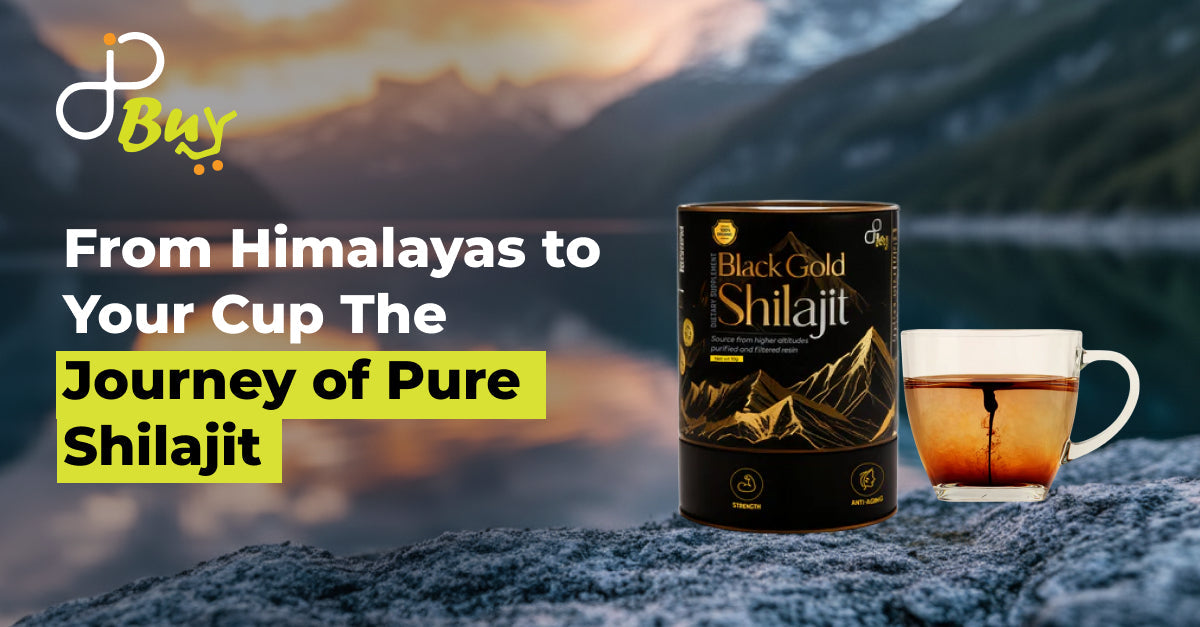
High in the world’s most unforgiving mountains, where oxygen thins and time seems suspended, a rare substance slowly forms over centuries. Revered by ancient healers and now rediscovered by modern wellness seekers, Himalayan shilajit begins a remarkable journey long before it reaches your cup.
The Origins: Born in the Heart of the Himalayas
Shilajit is not harvested overnight, nor is it manufactured in laboratories. Its story starts deep within the Himalayan mountain ranges, where layers of plant matter, herbs, and microbial life are compressed under immense geological pressure. Over hundreds or even thousands of years, this organic material transforms into a dense, mineral-rich resin that slowly seeps from rock crevices during warmer months.
What makes Himalayan shilajit especially valued is the unique ecosystem in which it forms. The Himalayas are among the youngest and most mineral-diverse mountain systems on Earth. As a result, the resin absorbs trace minerals, fulvic acid, and bioactive compounds that are difficult to replicate elsewhere.
Shilajit in Ancient Healing Traditions
Long before modern science could analyze it, shilajit was highly valued in traditional healing systems. Ancient texts referred to it as a “destroyer of weakness” and a rejuvenating substance believed to support longevity and vitality.
In ancient wellness traditions, Himalayan shilajit was commonly mixed with warm water, milk, or herbal preparations. This approach was thought to support better absorption and encourage consistent, long-term use instead of temporary relief. Shilajit in Ancient Healing Traditions Long before modern science could analyze it, shilajit was highly valued in traditional healing systems.
Natural Formation: A Slow and Delicate Process
Unlike herbs that grow annually, shilajit is the result of time itself. The formation process involves:
- Decomposition of ancient plant matter
- Microbial activity within rock layers
- Continuous pressure from tectonic movement
- Seasonal temperature changes
This slow evolution explains why authentic Himalayan shilajit is rare and why its quality depends heavily on altitude, environmental purity, and responsible sourcing practices.
Ethical Harvesting in High-Altitude Regions
Harvesting shilajit is as challenging as its formation. Local collectors often trek to elevations exceeding 15,000 feet, navigating steep terrain and unpredictable weather. The resin is gathered by hand, ensuring minimal disturbance to the natural environment.
Responsible sourcing of shilajit emphasizes sustainability. Ethical harvesters take only limited quantities, allowing the resin to regenerate naturally over time. This practice not only preserves the ecosystem but also maintains the integrity of the substance itself.
Purification: From Raw Resin to Consumable Form
Freshly collected shilajit contains impurities such as soil particles, small stones, and organic debris. Purification is therefore a critical stage in its journey. Traditional purification methods involve dissolving the raw resin in spring water, filtering it multiple times, and gently drying it under controlled conditions.
High-quality Himalayan shilajit is never exposed to harsh chemicals or extreme heat. Proper purification preserves its natural composition while ensuring it is safe for consumption.
The Science Behind Shilajit’s Composition
Modern research has helped explain why shilajit has been so highly valued for centuries. It is rich in fulvic acid, a compound known for enhancing nutrient absorption. Additionally, it contains trace minerals such as magnesium, zinc, iron, and potassium.
What distinguishes Himalayan shilajit is the balance of these elements, shaped by the Himalayan geological landscape. This complex profile is what gives the resin its dark color, distinctive taste, and water solubility.
From Mountain Resin to Your Cup
Traditionally, shilajit is consumed by dissolving a pea-sized amount in warm water or tea. This method allows the resin to dissolve fully, creating a mineral-rich infusion that fits seamlessly into daily routines.
When prepared correctly, shilajit has a smooth, earthy flavor that reflects its natural origin. Many people incorporate it into morning rituals, viewing it as a grounding start to the day rather than a supplement taken in haste.
Identifying Pure Shilajit
With growing global demand, the market has seen an influx of low-quality and synthetic imitations. Pure shilajit should soften at warm temperatures, dissolve completely in water, and leave no gritty residue.
Authentic Himalayan shilajit is typically dark brown to black, with a resinous texture rather than a powdery appearance. Transparency in sourcing and processing is a strong indicator of quality.
The Role of Altitude and Environment
Altitude plays a crucial role in the quality of shilajit. Higher elevations mean less pollution, greater mineral diversity, and slower formation processes. These conditions directly influence the potency and purity of the final product.
This is why Himalayan shilajit sourced from remote, high-altitude regions is often considered superior to varieties collected from lower or more industrialized areas.
Modern Wellness Meets Ancient Wisdom
Today, shilajit bridges the gap between traditional knowledge and contemporary wellness practices. While ancient healers relied on observation and experience, modern users appreciate the combination of history, natural sourcing, and scientific insight.
Incorporating Himalayan shilajit into daily life is less about following trends and more about reconnecting with nature’s slow, deliberate processes, an approach increasingly valued in a fast-paced world.
Conclusion
From ancient plant matter locked in Himalayan rock to a warm cup in your hands, the journey of Himalayan shilajit is a testament to nature’s patience and precision. Rooted in tradition, refined through care, and embraced by modern wellness seekers, it represents more than a supplement; it reflects a timeless connection between the mountains and mindful living.
Frequently Asked Questions (FAQs)
1. What makes Himalayan shilajit different from other types of shilajit?
Himalayan shilajit is formed in high-altitude regions with minimal pollution and rich mineral diversity. These conditions contribute to its unique composition, purity, and higher bioactive compound concentration compared to shilajit sourced from lower elevations.
2. How can I tell if shilajit is pure and authentic?
Pure shilajit softens when warmed, dissolves completely in water or tea, and leaves no residue. Authentic shilajit has a resin-like texture and a dark brown to black color, rather than appearing powdery or gritty.
3. What is the best way to consume shilajit daily?
Traditionally, a small pea-sized amount is dissolved in warm water, milk, or tea. This method helps preserve its natural compounds and makes it easy to incorporate into a daily wellness routine.
4. Is Himalayan shilajit safe for long-term use?
When properly purified and sourced responsibly, Himalayan shilajit is generally considered safe for regular use. Choosing products from transparent and reputable sources is essential to ensure quality and safety.
5. Does shilajit have a specific taste or smell?
Yes, shilajit has a natural, earthy, slightly bitter taste and a mild mineral aroma. These characteristics are normal and reflect its organic origin and mineral-rich composition.



Leave a comment
This site is protected by hCaptcha and the hCaptcha Privacy Policy and Terms of Service apply.